 ▾
▾Mobile networks of the sixth generation will push the boundaries of communication and data transmission. 6G internet will offer speeds in the order of terabits, minimal delay, and integration with artificial intelligence. In the article, we explain how this technology works, how it differs from 5G, what frequencies it uses, and why it is essential for smart cities and modern industry.
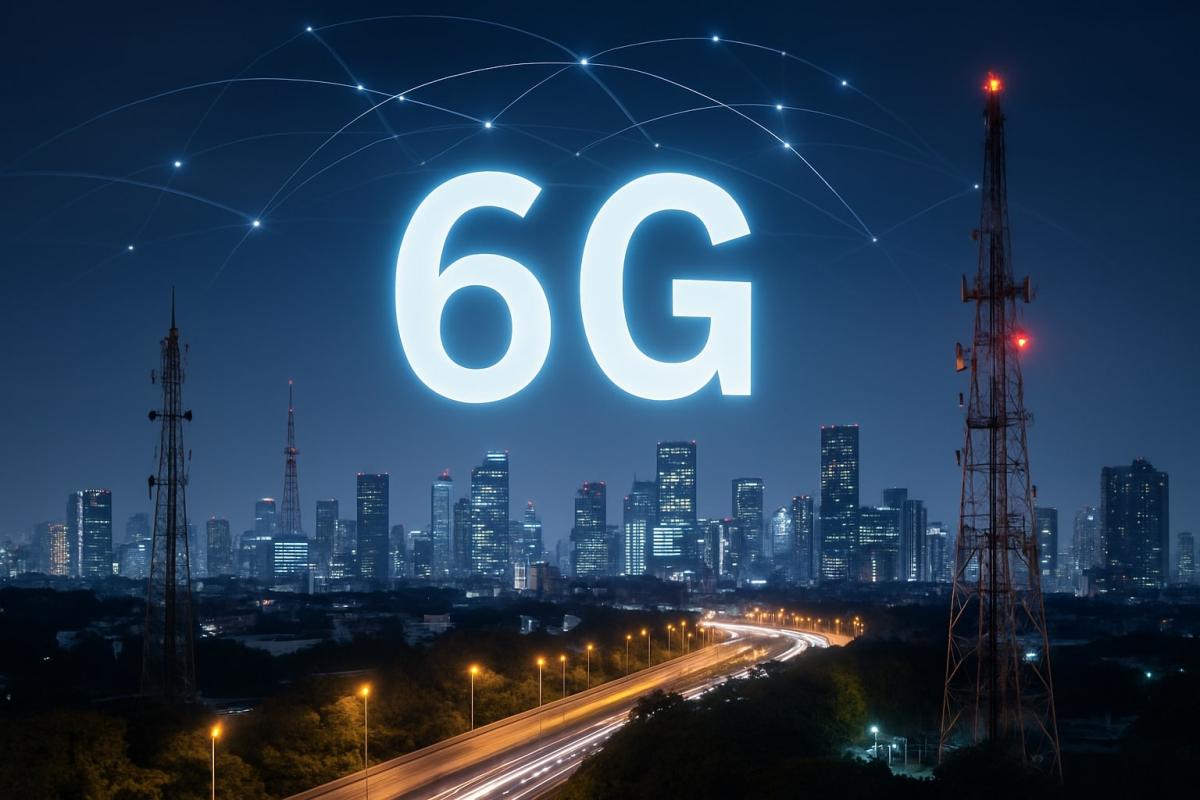
Technological development never stops, and with it, the way our internet connection works also changes. While fifth-generation networks are still spreading, researchers are already working on their successor. 6G internet is set to be the next step in the evolution of mobile networks, offering connectivity that will surpass today's possibilities manifold.
Currently, it's a technology in the research phase, but early tests show that its potential is immense. The goal is to build a network capable of handling exponentially growing data volumes and serving billions of devices worldwide. Such a system could significantly transform industry, transportation, and everyday digital life.
In the article, we explain what 6G is, how it works, and how it differs from 5G. We will look into the speeds it promises and who's behind its development. You'll also learn about the challenges researchers face before 6G becomes a reality.
What is 6G and how does it work
6G internet represents the new generation of mobile networks, set to build on 5G while changing the very principle of wireless transmission. Current technologies focus mainly on larger bandwidth and more efficient signal transmission, while 6G will function as an intelligent system capable of adapting to its environment and managing itself.
The foundation will be 6G frequencies in the terahertz band, roughly from 100 gigahertz to 3 terahertz. Thanks to these, it will be possible to transmit enormous amounts of data in a fraction of a second. However, the shorter wavelength means less range and greater sensitivity to obstacles, requiring the construction of new infrastructure with a dense network of microcells, satellites, and antennas with precise signal direction.
The network will be closely integrated with artificial intelligence, which will ensure dynamic traffic management. In practice, this means the connection will continuously adapt to current conditions. If the number of connected devices increases in a particular area, the system will redistribute capacity to maintain stable speed and minimal delay.
Another aspect of development is the effort to enable the network to perceive its surroundings using integrated sensors. This capability will open the way to more precise positioning, object tracking, and new applications in industry, transportation, or healthcare.
How fast will the new generation of networks be
The expected speed of the 6G network is to be several times higher than the current 5G technologies. In laboratory tests, researchers have already achieved transmission of over 900 gigabits per second, and the first pilot measurements in the United Arab Emirates confirmed a value of 145 gigabits. In the future, a theoretical limit of up to 1 terabit per second is anticipated.
This performance will be enabled by 6G frequencies in the terahertz band. They significantly increase data capacity and multiplex transmission options, allowing the network to simultaneously process multiple signals in different frequency ranges. The result will be transmission with almost no delay, with latency in the microsecond range.
6G internet will enable the use of augmented and virtual reality in real-time, instant communication between autonomous vehicles, and the transmission of large volumes of data between industrial devices.
How will the 6G network manage itself
Unlike previous generations, the 6G network will no longer just transmit data. It will become an active network capable of deciding how to handle data, adapting to current conditions in real-time.
Key principles of the new architecture:
- Artificial intelligence – will manage traffic, optimize transmissions, and predict user needs before they occur.
- Local data processing – part of the computations will occur directly in edge devices, so data won't have to travel to distant data centers.
- Predictive capacity management – the network will be able to anticipate where overloading might occur and redistribute power among nodes in time.
- Efficient energy usage – 6G frequencies and smart transmission management will help reduce consumption and infrastructure costs.

Where will 6G be applied: smart cities, cars, and digital twins
In practice, 6G internet will manifest as the interconnection of smart systems, industry, and digital services. The sixth-generation network will offer such capacity, precision, and network speed that it will be able to transmit massive data volumes without delay, even in environments where millions of devices communicate simultaneously.
Specific use cases:- Smart cities – interconnected sensors and transport systems will ensure smoother traffic, safer intersections, and more efficient energy management.
- Industry – factories will operate as interconnected ecosystems managed in real-time, where machines communicate via 6G frequencies without interruption.
- Autonomous vehicles – instant data exchange between cars and their surroundings will enable quicker reactions and safer operation.
- Healthcare – remote operations and data transfers from devices will happen with minimal latency, opening new opportunities for diagnosis and treatment.
- Digital twins – thanks to 6G, virtual copies of physical objects and entire systems will emerge, helping to test, simulate, and optimize processes.
6G research and development – who's leading the race
Although 6G technology is still in the research phase, leading technological and academic institutions worldwide are already involved. The aim is to overcome the current data transmission limits and prepare infrastructure capable of serving billions of devices in real-time.
The United Arab Emirates and the first record
In October 2025, the United Arab Emirates conducted the first 6G pilot test in the Middle East. Companies e& UAE and New York University Abu Dhabi achieved a transfer speed of 145 gigabits per second. The test used 6G frequencies in the terahertz band and confirmed that the new generation of networks could handle transmission with minimal delay and extreme capacity.
Research in China and the 6G satellite
China also has a strong research base. Chinese scientists from the University of Electronic Science and Technology launched the first experimental 6G satellite named UESTC Star Era-12 into orbit. Its goal is to test wireless data transmission between satellites and ground stations. China is among the countries most focused on integrating space and ground infrastructure.
Next G Alliance and corporate involvement
In the USA, the platform Next G Alliance was established, bringing together key players in the global tech industry. Companies like Apple, Google, Qualcomm, Microsoft, Nokia, Samsung, Ericsson, LG, and others collaborate on the development of 6G internet here. The alliance's objective is to unify research, share data, and create common standards for transmission in terahertz bands.
The current pace of development indicates that the first commercial tests could appear around 2028. Until then, 6G remains a subject of intense research involving universities, the industry, and government institutions worldwide.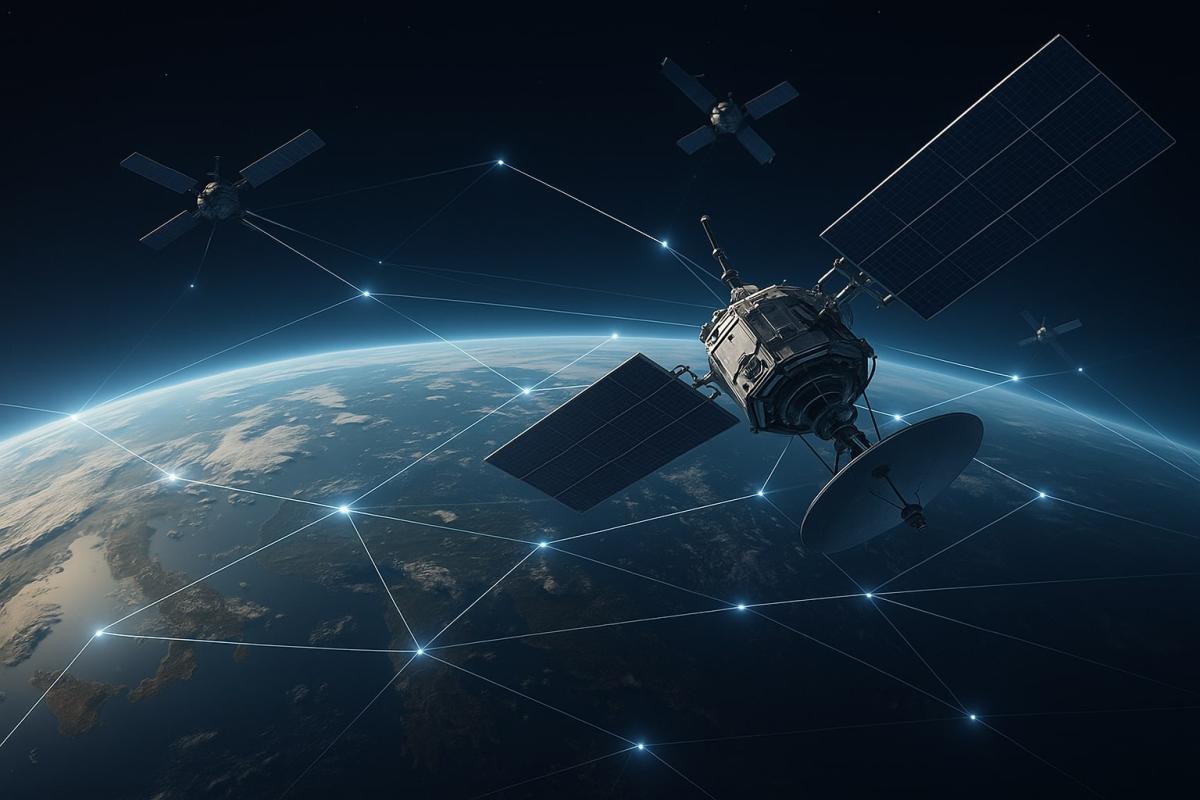
Challenges and obstacles: technology is not yet mature
Although 6G internet research is advancing rapidly, the technology is not yet ready for real-world deployment. Current chips, memories, and network infrastructure can't handle the data flows that 6G promises. Developers are thus testing individual components and seeking new materials and methods to minimize signal loss.
Main challenges in 6G development:- insufficient processing power and memory capacities,
- high energy demands and device cooling requirements,
- limited range of terahertz 6G frequencies,
- missing standards and unified rules among countries.
A new era of a connected world
The 6G network won't be just another step in mobile network development. It will bring an environment where data flows at speeds we can hardly imagine today and where connectivity becomes the foundation of everyday functionality.
The sixth-generation network will enable technologies to react instantaneously, understand context, and adapt to the needs of both people and machines. An infrastructure will emerge that connects the digital and physical worlds into one system – from smart cities to industrial automation and services that are now being developed in laboratories.The future of 6G technology is still being written, but one thing is certain: it will change the very meaning of the word 'connection.' Speed and coverage are becoming intelligence and interconnectivity of everything around us.
Is blue light really a problem? The answer isn't so simple

The topic of blue light has led to many simplifications and unnecessary fears. Blue light exposure before sleep is often discussed, but its impact is not limited to just sleep. Let's put things in context, separate facts from myths, and see when it makes sense to address its effects and when it is more about excessive concern.
Are you chatting with a human or a bot? How to identify AI in chat

Online chats are often handled by artificial intelligence today, and at first glance, the responses appear to be from a real person. This is especially true for customer support, where speed and fluency are key. We'll look at how to identify AI in chat, what signs you can use to distinguish it from a human, and where the line of recognition becomes very thin.
What is ransomware and why does it no longer threaten only large companies?

Ransomware attacks are among the most common cyber threats today and are no longer just a concern for large companies. Just one careless click can cost you access to your data. We'll explain what ransomware is, how it works, and why attackers are increasingly targeting average users and smaller businesses.
How zero trust works: why mere connectivity no longer means safety

Connecting to the internet today is not just a matter of speed but also of trust. Networks handle more and more devices, sensitive data, and services that communicate almost constantly. This is why an approach called zero trust has emerged, where nothing is automatically considered safe. The article explains why this model was created and how it subtly influences everyday internet functioning.
10 reasons why your phone is drained sooner than expected

It happens that the battery life decreases faster than one would expect, even when the device is not particularly stressed during the day. Often, it's not a single specific error but a sum of small influences that gradually accumulate. This article explains what has the greatest impact on battery life, when idle draining occurs, and why this can turn into an issue causing the phone not to last even one day.
Wi-Fi on a plane? Yes, but it works differently than at home

Connecting to the internet during a flight is no longer an exception, but it still doesn't work as you're used to at home. In-flight Wi-Fi depends on the technology used, the type of aircraft, and network congestion, and paying for access doesn't always mean fast connection. In this article, we'll explain how in-flight internet works, why it can be slow, and when you can rely on it.