 ▾
▾Wireless charging has evolved from a luxury feature to a standard part of most modern phones. Simply place your mobile on the pad, and energy begins to flow without searching for a cable and connector. We explain how wireless charging works, what it entails, and why Qi and Qi2 technologies have become the new standard of convenience.
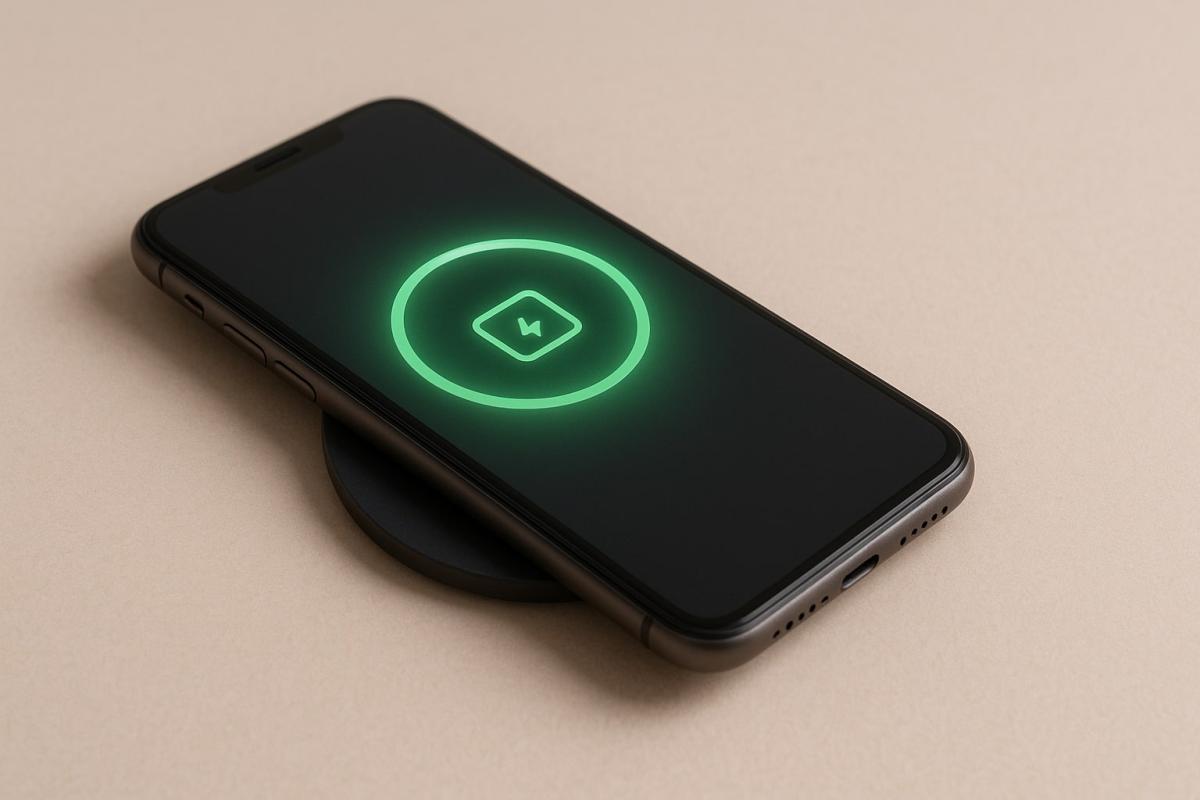
Cables are slowly fading away, and with them the constant plugging in of phones. Just place the device on the pad, and it starts charging almost instantly. Wireless charging has become a symbol of convenience and is primarily found in higher-end smartphone models today.
From an originally supplementary feature, it has become a technology finding its way into other devices over the years. Smartwatches, headphones, and power banks are charged this way, and even though it's not always the same standard, the principle remains similar. Energy is transferred without the need for a cable. Users appreciate the simplicity and compatibility brought by the Qi standard, while the newer Qi2 increases efficiency and precision through magnets.
Wireless charging is gradually becoming a common part of modern electronics. But how does this principle work, and what exactly happens between the pad and your phone when energy starts flowing?
How wireless charging works
You place your phone on the pad, the light turns on, and the device starts charging. Wireless charging isn't entirely without wires. The pad itself must be connected to the electrical grid, as it draws the energy needed to transfer to the phone from there.
This simple principle is based on a physical phenomenon called electromagnetic induction, known to humanity for more than a hundred years.
Inside the charging pad is a coil through which alternating electric current flows. This creates a magnetic field that acts on the second coil in the phone. In it, magnetic energy is converted into electrical energy, which charges the battery. To ensure the transfer is as efficient as possible, both coils must be very close to each other, usually within a few millimeters.
During mobile charging, communication takes place between the phone and the charger. They share information about position, temperature, and performance to ensure charging is safe and with minimal losses.
Thanks to this precise coordination, wireless charging has become not only a convenient but also a reliable way to replenish energy without needing to connect a cable.
From Qi to Qi2: The evolution of the charging standard
To ensure that different devices are compatible, the Qi standard was developed, which unified how wireless charging occurs and how phones communicate with chargers.
Qi ensures compatibility across brands, safe energy transfer, and an energy-saving mode when there is no device on the pad. Its development and certification are handled by the Wireless Power Consortium, where manufacturers like Samsung, Sony, or Apple collaborate.
However, technology continues to evolve. Its successor, Qi2, adds magnets that help the phone align precisely over the charger. This reduces losses, and energy transfer becomes faster. The new standard also increases maximum power and maintains backward compatibility with older devices.
While all newer iPhones from the 12 series support Qi2, its expansion is slower among Android phones. Many models labeled "Qi2 Ready" can utilize the new standard with a magnetic cover.
Speed and efficiency in practice
Wireless charging offers convenience but still falls behind the speed of wired connections. Energy transfer results in losses, as part of it is converted to heat.
The original Qi version offered power up to 5 watts. Over time, chargers with power ranging from 15 to 25 watts have emerged, which are common today. Some brands, like Xiaomi or Honor, are developing their systems with over 80 watts of power. However, these usually only work with specific models and are not compatible with other devices.
The newer Qi2 standard addresses the main weakness of previous versions – the inaccurate placement of the phone. Built-in magnets align the device precisely over the coil, reducing losses and speeding up energy transfer. The charger also communicates with the phone, regulates power, and monitors temperature to prevent battery overheating.
With these improvements, wireless charging approaches the efficiency of conventional chargers and becomes a reliable solution for everyday use.
Advantages and disadvantages
Wireless charging has gained popularity mainly due to the convenience it provides. There's no need to find the right cable or aim for the connector. The phone just needs to be placed on the pad, and energy starts flowing. However, besides advantages, the technology also has its limits.
Advantages of wireless charging
- easy use without a cable,
- saves the phone's connector,
- universal compatibility thanks to the Qi standard,
- the ability to have multiple devices on one charging station,
- safe management of power and temperature during charging.
Disadvantages of wireless charging
- slower than classic cable charging,
- higher energy losses and heat generation,
- requires precise placement of the phone on the pad,
- cannot be conveniently used while charging
- long charging periods may lead to greater battery heating.
Reverse charging: When the phone becomes a charger
Reverse charging uses the same principle as wireless charging, just in the opposite direction. A phone with this feature can transfer energy to another device – such as wireless earbuds, smartwatches, or another phone.
Just enable the feature in the settings and place the second device on the back of the phone. Both coils connect, and energy transfer starts automatically. It is most commonly used in Samsung (PowerShare) or Huawei models, among the first manufacturers to offer reverse charging.
For energy transfer, the phone needs to have a glass back. Metal would obstruct the path of the electromagnetic field, making wireless charging impossible.
Although reverse charging won't replace a conventional power bank, it can be very useful in situations where you need to quickly charge smaller devices.
How to choose a charger and take care of the battery
When choosing a wireless charger, the most important thing is to verify that it supports the Qi standard. This ensures the charger will work with most phones on the market. The power of standard pads is around 15 watts, ideal for everyday mobile charging.
Stands that allow you to view the display while charging or multi-port stations for charging several devices at once are also practical. In the car, it's advisable to choose a model with firm fixation, so the phone remains in place even while driving.
For longer battery life, it's recommended to keep devices away from direct sunlight, avoid overheating, and not leave the phone on the charger permanently after reaching 100%. Although wireless charging is gentle on ports, the battery benefits from being discharged and recharged in the classic way from time to time.
Where is wireless charging heading next?
In recent years, wireless charging has advanced significantly. From a slow and rather experimental technology, it has become a standard feature of smartphones. With the advent of the Qi2 standard, efficiency and speed have increased, and magnets have solved the problem of precise device placement.
However, the question remains, where will the technology go next. Manufacturers are already testing energy transfer over longer distances, such as charging a mobile lying just near the station. This solution would eliminate even the last need to place the phone in a specific spot.
For now, however, it's more about laboratory experiments. Mass adoption would require new safety standards and lower energy losses. Current development is thus mainly focused on optimizing existing solutions and integrating chargers into furniture, cars, or public spaces.
Are you chatting with a human or a bot? How to identify AI in chat

Online chats are often handled by artificial intelligence today, and at first glance, the responses appear to be from a real person. This is especially true for customer support, where speed and fluency are key. We'll look at how to identify AI in chat, what signs you can use to distinguish it from a human, and where the line of recognition becomes very thin.
What is ransomware and why does it no longer threaten only large companies?

Ransomware attacks are among the most common cyber threats today and are no longer just a concern for large companies. Just one careless click can cost you access to your data. We'll explain what ransomware is, how it works, and why attackers are increasingly targeting average users and smaller businesses.
How zero trust works: why mere connectivity no longer means safety

Connecting to the internet today is not just a matter of speed but also of trust. Networks handle more and more devices, sensitive data, and services that communicate almost constantly. This is why an approach called zero trust has emerged, where nothing is automatically considered safe. The article explains why this model was created and how it subtly influences everyday internet functioning.
10 reasons why your phone is drained sooner than expected

It happens that the battery life decreases faster than one would expect, even when the device is not particularly stressed during the day. Often, it's not a single specific error but a sum of small influences that gradually accumulate. This article explains what has the greatest impact on battery life, when idle draining occurs, and why this can turn into an issue causing the phone not to last even one day.
Wi-Fi on a plane? Yes, but it works differently than at home

Connecting to the internet during a flight is no longer an exception, but it still doesn't work as you're used to at home. In-flight Wi-Fi depends on the technology used, the type of aircraft, and network congestion, and paying for access doesn't always mean fast connection. In this article, we'll explain how in-flight internet works, why it can be slow, and when you can rely on it.
RCS messages: what they are, how they work, and when it's better to turn them off
RCS chat is appearing more frequently in mobile devices, especially with the arrival of iOS 18 and the gradual phasing out of older networks. It is a method of communication that uses the internet, offering higher quality sharing of photos and videos than traditional SMS. We'll explain what RCS means and when it makes sense to keep it enabled.