 ▾
▾Cities around the world are seeing an increase in autonomous vehicles as part of their transportation systems. However, their reliability varies significantly by region. We will explore where this technology is already commonly transporting passengers and what autonomous driving means in practice today.
A few years ago, reports of cars capable of handling part of the drive on their own were more of a novelty from technology fairs. Today, however, it's no longer about isolated prototypes. Autonomous vehicles are gradually penetrating regular traffic and are starting to appear in situations previously reserved solely for human drivers. Expectations have also shifted. Instead of questioning whether this technology will take hold, there's increasing discussion about where it makes the most practical sense and what demands real conditions place on it.
In this article, we will examine what underpins autonomous driving, the principles that keep an autonomous vehicle on the road, and the situations in which the technology is already being applied. We will focus on specific technical foundations and operational experiences to demonstrate what current systems can do, where they have their limits, and what factors determine their further development. Thanks to this, it will be clear why autonomy is moving ever closer to regular traffic, but at the same time remains cautious where the environment is too complex or unpredictable.
The technology autonomous vehicles rely on
For an autonomous vehicle to drive safely, it needs to continuously gather accurate information about the space around it. It uses a combination of sensors that capture various types of data. Cameras recognize lanes, traffic signs, object shapes, and their movement. Radar measures the distance and speed of cars in front and beside the vehicle, reliably even in adverse weather or darkness. Another technology works with light flashes that reflect off surrounding obstacles. Based on the time it takes for them to return, it creates accurate spatial information about the surroundings. Thanks to the combination of these sources, a detailed image of the road situation emerges.
Sensors, however, are not the only source of data. The car also needs to know exactly where it is located. It uses highly detailed maps that are much more accurate than standard navigation. These contain information about the exact road profile, lane placements, and junction shapes. The system continually compares these details with real-time sensor data. If both layers match, it is confident in accurately interpreting the environment.
All gathered information flows into the vehicle's central computing software. It analyzes this data in real-time and decides how the vehicle should react. The software evaluates the trajectories of other cars, recognizes obstacles, assesses potential risks, and determines suitable speeds and maneuvers. These decision-making algorithms are based on a vast amount of driving data that helps predict common situations and less frequent scenarios.
Part of the whole system includes safety backups. If a sensor temporarily fails to provide sufficient data, the other technologies can compensate. Likewise, backup computing units are present in the car, ready to take over critical functions if the main system fails.
Autonomous driving thus relies on the integration of multiple technologies, together creating a robust and reliable system. Only through this synergy can the vehicle's response be fast, predictable, and stable, provided the conditions and data are sufficiently clear.
Automation levels according to SAE and their true meaning
The international organization SAE International has created a scale defining six levels of autonomy from 0 to 5. This framework is used by automakers and regulatory authorities worldwide, serving as a unified description of how much work a car can handle independently and when human intervention is still necessary.
Level 0
Driving is entirely in human hands. Systems can warn of risks but do not interfere with driving.
Level 1
The vehicle assists with one specific task, such as adaptive cruise control or light lane corrections. Overall control remains with the driver.
Level 2
The system combines multiple functions simultaneously. The car maintains its lane, adjusts speed, and responds to traffic ahead. Responsibility, however, stays with the human driver.
Level 3
In specifically defined situations, the car can take over driving and monitor traffic itself. The driver must be ready to take control if the system requests it. This level is primarily applied on highways.
Level 4
The vehicle is fully capable of driving in designated areas or under specific conditions. Typical examples include robotaxis in restricted urban zones. Outside these areas, autonomous driving would not operate.
Level 5
Full autonomy without restrictions. The car should handle any traffic without human intervention. This level is not yet available in regular traffic.
Where autonomous cars are already operating today
In regular streets, autonomous operation is most advanced in the USA. The most visible service is Waymo One, which transports passengers without a driver in several parts of Phoenix, such as Tempe or Chandler, and in selected areas of San Francisco and Los Angeles. The rides take place in pre-mapped zones where the system has been extensively tested over time. A similar model is expanding to Austin and Atlanta.
In California, Cruise also operates driverless cars. Its vehicles primarily run in San Francisco and several smaller cities. Despite stricter regulatory oversight, operations continue.
In China, the scope of autonomy is even greater. Companies like Baidu Apollo or AutoX operate robotaxis in Beijing, Shenzhen, Wuhan, or Guangzhou. Some city routes allow full autonomous rides without a driver across dozens of kilometers. Additionally, China boasts autonomous buses running on regular routes in places like Shanghai and Shenzhen.
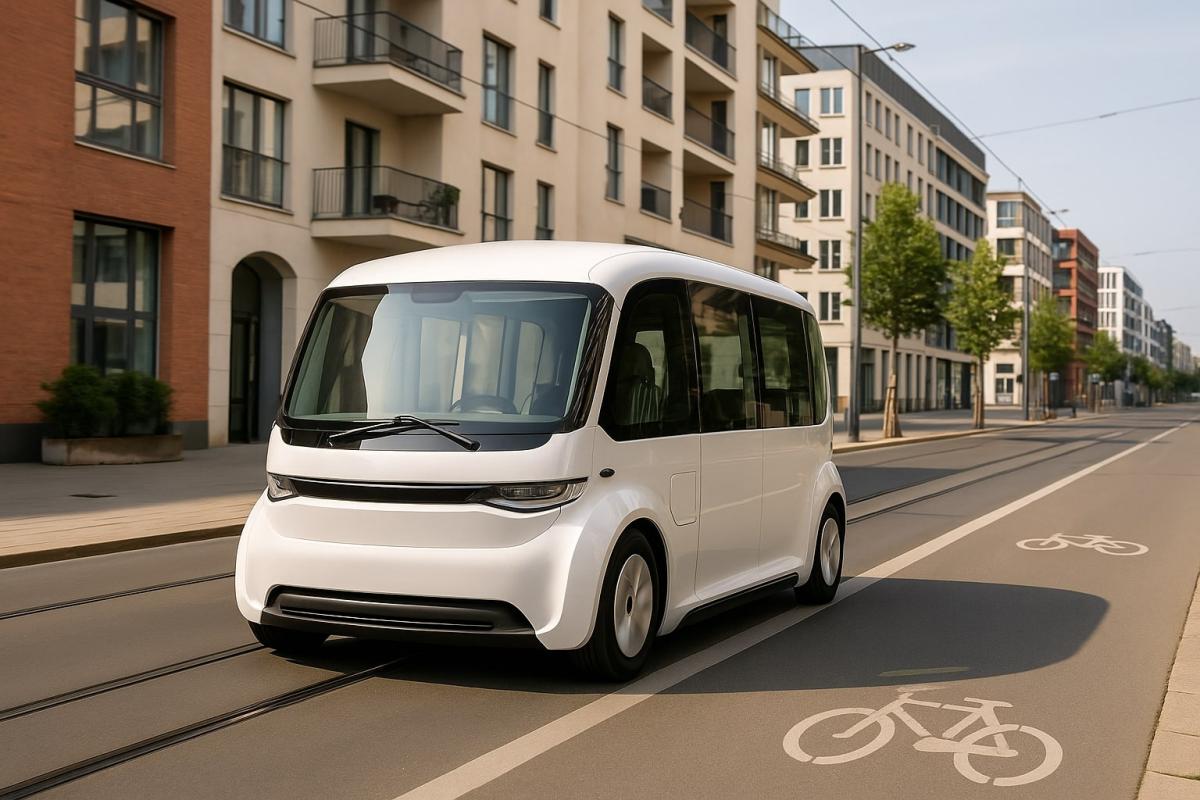
Europe progresses more cautiously, but autonomous driving is not an exception here either. In Germany, Level 3 systems can be utilized on selected highway sections. In Finland and France, autonomous minibuses operate in smaller urban areas, often within campuses or residential districts. Some European cities are also testing robotaxis with an operator on board, such as in Stockholm or Paris.
Where does autonomy have its limits?
The biggest challenge for autonomous systems is situations requiring more than just precise data. These include scenarios where traffic rules overlap with human interaction. Typical are intersections without traffic lights, where drivers give way to each other using simple gestures or eye contact. Autonomous vehicles do not use such signals and rely solely on measurable data. This leads to more cautious responses in some situations, slowing down traffic.
Problems also arise in scenarios that do not match pre-mapped data or test-driving information. These include temporary changes like provisional signage, detours, or roadworks. While autonomous software can handle them, it often requires greater distance or slower responses to ensure accurate interpretation.
Another limitation is the system's inability to understand the wider context. A human driver often foresees a traffic jam approaching, notices a child on the sidewalk might run into the road, or predicts a vehicle ahead slowing down for an unseen pothole. Such situational reading is still challenging for autonomous driving, as it relies only on measurable and unequivocal data that may not capture the full intent of surrounding participants.
A significant limitation is also the lack of foresight into human behavior. Drivers often predict actions based on subtle details, such as how one holds the steering wheel or the vehicle's positioning in the lane. For the system, evaluating such behavior is difficult, opting for a more cautious strategy.
These limitations are not obstacles that halt progress. They demonstrate, however, that autonomy currently operates best in environments where rules and participant behavior are as straightforward as possible, and where data is reliably interpretable. Anything deviating from expected patterns is challenging for current systems and requires ongoing research and refinement.
Myths surrounding autonomous driving
"An autonomous car drives completely by itself."
In reality, no commonly available system today can manage all situations without supervision. Autonomous driving is always limited to specific conditions, selected routes, or precisely defined areas. Outside of these, the system shuts down and requests the driver to take over. The idea of the car "driving anywhere on its own" does not yet match reality.
"A machine always reacts faster than a human."
An autonomous system has a quick response time, but only when the data is clear. In scenarios lacking context or with a confusing environment, the system might hesitate or choose an overly cautious strategy. The issue isn't speed but rather scenario comprehension.
"Autonomous cars make mistakes because the software isn't reliable enough."
In practice, issues are primarily caused by the environment. Provisional signage, unexpected obstacles, or the behavior of other road users can lead the system into scenarios not already captured in data. While the technology is robust, the world around it is highly dynamic.
"Once autonomy is engaged, the car assumes all responsibility."
The legal framework varies by country. In many instances, the driver remains obliged to be ready to intervene. Only in some regions is the liability partially transferred to the manufacturer or service provider. Thus, there's no universal rule applicable everywhere.
What will the next step towards full autonomy look like?
The immediate future won't be about cars driving completely without a human driver, but rather about gradually expanding the range of situations they can handle independently. The technology will move from selected districts and highways to larger areas where the system will operate with greater certainty and fewer limitations.
A pivotal role will be played by connecting vehicles with infrastructure. Traffic lights, road signs, and navigation data will be able to provide more accurate information directly to the car, reducing uncertainty in situations that are currently complex for autonomy.
Legislation will also be crucial. Once clear conditions for responsibility and data handling are established, services like robotaxis can expand to additional cities and states. Thus, development will likely follow a path of stable, clearly defined rules rather than rapid leaps.
The coming years will mainly bring broader and more reliable application of current systems. Full autonomy remains a goal for the more distant future, but the technology will become a more accessible and natural part of regular traffic operations.
Phone instead of a card or key. What is NFC and how does it work?

Just hold your phone up to a terminal and within moments the payment is made. However, NFC technology is capable of much more. We will explain what NFC is and how it works, what actually happens during NFC mobile payments, what else you can use it for, and how secure it is. We will also show what NFC tags are and how they can simplify some daily tasks.
What would happen if the internet went down for a day?

What if there was a full-day internet outage? An immediate collapse of society wouldn't occur, but daily operations would quickly become complicated because today's world is more dependent on the internet than we often realize. Which services would stop functioning first, and what would happen with payments, transportation, or work?
WPA, WPA2, WPA3: Which Wi-Fi security should you use today?

WPA, WPA2, WPA3, AES or TKIP? Wi-Fi security settings might initially seem unnecessarily complicated. However, when you understand what each abbreviation stands for, it becomes fairly simple. Therefore, we'll explain the differences between them and which is the best choice today. We'll also suggest what settings to choose if you have older devices at home that don't support the latest standard.
Is incognito mode really anonymous? Who still sees what you're doing

Do you think incognito mode hides you from everyone on the internet? In reality, it works a bit differently. We explain what it actually does, when it's sensible to use it, who can still see your activity, and whether history can be traced in incognito mode.
Why Does AI Hallucinate? A Peek Under the Hood of Language Models

AI can answer almost any question in just a few seconds. However, sometimes it confidently states information that is not true. Why does this happen and what are so-called AI hallucinations? In this article, we'll explain how large language models work, why they sometimes create false answers and how developers are gradually trying to mitigate this issue.
What is a CDN and why is internet content copied worldwide

Behind every loaded video, photo, or webpage is a technology called CDN. It is used by streaming services, social networks, and regular websites, yet many people have never heard of it. In this article, we will explain what this abbreviation means, how it works, why internet content is stored in various locations around the world, and why today's internet can hardly do without it.