 ▾
▾Streaming platforms are experiencing a massive boom, changing the way gamers and viewers perceive the gaming world. With the rise of cloud gaming, augmented and virtual reality, and ever-expanding monetization opportunities, gaming and streaming are becoming more than just a hobby. Discover what lies ahead for game streaming in the coming years.
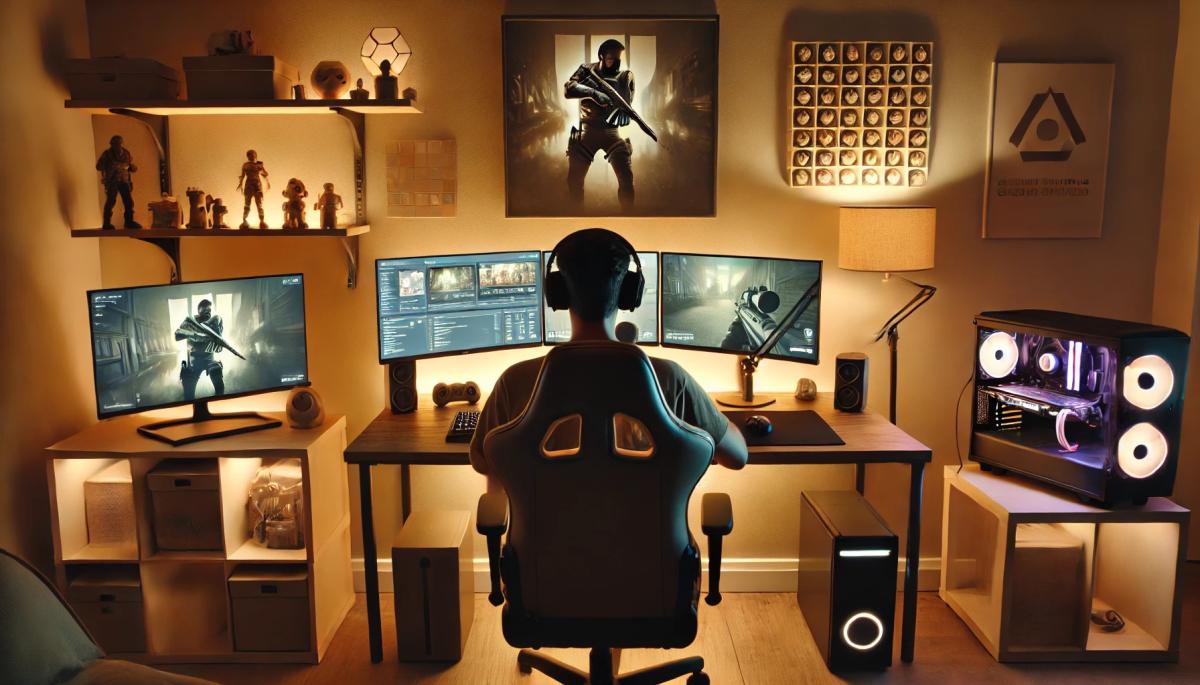
Streaming platforms are undergoing rapid development, changing the rules of the game not only for viewers but also for the players themselves. Thanks to new technologies and approaches, traditional content watching becomes an immersive experience. It is no wonder that the popularity of streaming is on the rise. Therefore, we decided to take a look at what the future holds for this sector.
Cloud gaming is experiencing a boom
Cloud gaming is one of the main trends that is transforming the gaming world. Services like NVIDIA's GeForce Now, Microsoft's xCloud, Google Stadia, or PlayStation Now allow players to play the most demanding games even on devices that wouldn't otherwise support such performance.
In practice, this means all you need is a stable internet connection and you can play practically from anywhere without the need to own a gaming console or an expensive computer. For regular players, cloud gaming is a real breakthrough.
Thanks to it, they have access to the latest titles at a fraction of the cost and without complex game file downloads. Cloud gaming will also benefit from the gradual acceleration of internet connections and the arrival of new technologies, making gaming even more accessible and seamless.
You can also expect improvements in streaming quality in the form of 8K streaming. This promises realistic depictions of gaming worlds with stunning details that draw viewers deeper into the action. However, with the increase in image quality, the demands on internet connection speed will also rise.
New monetization opportunities for gamers
Game streaming platforms have become a new sector where players can turn their passion into a full-fledged income. Today, players can earn through donations, advertisements, or subscriptions.
Therefore, streaming is no longer just a hobby but can become a full-fledged career. Besides financial support from fans, there is the possibility of exclusive partnerships with game studios or hardware manufacturers.
Streaming will shift to mobile devices
Mobile gaming is gaining popularity, and therefore, streaming platforms are increasingly focusing on optimizing content for mobile devices. Optimized mobile streaming technologies will allow users to play and watch gaming content in full quality directly on smartphones and tablets.
Mobile platforms are already implementing a series of improvements that help minimize data consumption and save battery life, and these technologies are expected to continue to develop.

AR and VR could also play a role
Technologies like AR (augmented reality) and VR (virtual reality) bring completely new possibilities to streaming. With VR streaming, viewers can literally step into the gaming world and watch the action through the player's eyes, something that traditional screen viewing cannot offer.
Experiences in virtual reality on platforms like VRChat allow players to meet in a virtual environment and explore digital worlds together in real-time. These are entirely new forms of interaction, where players not only watch the game but can actively collaborate and respond to situations.
VR streaming thus offers a way to experience the game directly while building an active community. Augmented reality (AR) connects gaming content with the real world, which can be a major attraction for both casual gamers and those seeking new experiences.
Imagine, for example, that viewers are watching a stream and at the same time have the opportunity to see game characters or elements projected into their surroundings through their smartphone or AR glasses. In the future, AR and VR are expected to play a key role not only in game streaming but also in sports broadcasts, education, and other content.
The future lies in interactivity
Platforms like Twitch or YouTube Gaming have completely changed the gaming experience by allowing players and viewers to engage in the action. It's no longer just about watching someone's game – viewers can react in real-time, support their favorite streamers, and even influence the game itself.
On some platforms, viewers can decide the player's actions, choose their weapons, or send them on challenges. Interactivity adds a new dimension to watching games and creates a stronger bond between players and their community. This turns game streaming into real entertainment where everyone can have an impact on what happens in the game.
Personalization and artificial intelligence
Artificial intelligence (AI) plays an increasingly important role in content personalization. Streaming platforms use AI to recommend content to viewers based on their preferences and history, allowing players to discover new games and creators that interest them the most.
Personalization can also include streaming settings options – from preferred genres to specific gaming styles. The result is a "tailored" experience that enhances viewer satisfaction and simplifies navigation in the ever-growing volume of available content.
The vision of the future of game streaming also includes the possibility of virtual tournaments and shared gaming experiences in real-time. Players and viewers from different parts of the world will be able to connect and enjoy the game's action together. Some predict virtual arenas where viewers watch matches, cheer for their favorite teams, and move in the same digital space as the players.
Streaming platforms are gradually changing the way the gaming community approaches favorite titles. For gamers, this means easier access to gaming experiences, the opportunity to earn from streaming, and more frequent interaction with viewers and the community. Viewers, on the other hand, get a personalized experience that brings them even closer to their favorite streamers.
Phone instead of a card or key. What is NFC and how does it work?

Just hold your phone up to a terminal and within moments the payment is made. However, NFC technology is capable of much more. We will explain what NFC is and how it works, what actually happens during NFC mobile payments, what else you can use it for, and how secure it is. We will also show what NFC tags are and how they can simplify some daily tasks.
What would happen if the internet went down for a day?

What if there was a full-day internet outage? An immediate collapse of society wouldn't occur, but daily operations would quickly become complicated because today's world is more dependent on the internet than we often realize. Which services would stop functioning first, and what would happen with payments, transportation, or work?
WPA, WPA2, WPA3: Which Wi-Fi security should you use today?

WPA, WPA2, WPA3, AES or TKIP? Wi-Fi security settings might initially seem unnecessarily complicated. However, when you understand what each abbreviation stands for, it becomes fairly simple. Therefore, we'll explain the differences between them and which is the best choice today. We'll also suggest what settings to choose if you have older devices at home that don't support the latest standard.
Is incognito mode really anonymous? Who still sees what you're doing

Do you think incognito mode hides you from everyone on the internet? In reality, it works a bit differently. We explain what it actually does, when it's sensible to use it, who can still see your activity, and whether history can be traced in incognito mode.
Why Does AI Hallucinate? A Peek Under the Hood of Language Models

AI can answer almost any question in just a few seconds. However, sometimes it confidently states information that is not true. Why does this happen and what are so-called AI hallucinations? In this article, we'll explain how large language models work, why they sometimes create false answers and how developers are gradually trying to mitigate this issue.
What is a CDN and why is internet content copied worldwide

Behind every loaded video, photo, or webpage is a technology called CDN. It is used by streaming services, social networks, and regular websites, yet many people have never heard of it. In this article, we will explain what this abbreviation means, how it works, why internet content is stored in various locations around the world, and why today's internet can hardly do without it.